
Why Your Knee Makes Clicking Sounds
Have you ever bent your knee and heard a clicking or popping sound? Many people experience this every day while walking, climbing stairs, squatting, or getting up from a chair. In most cases, the sound is harmless. However, sometimes it may be a sign of an underlying knee problem that needs medical attention.
In this article, we will explain Why Your Knee Makes Clicking Sounds, when it is normal, when you should worry, and how an experienced orthopedic specialist can help you.
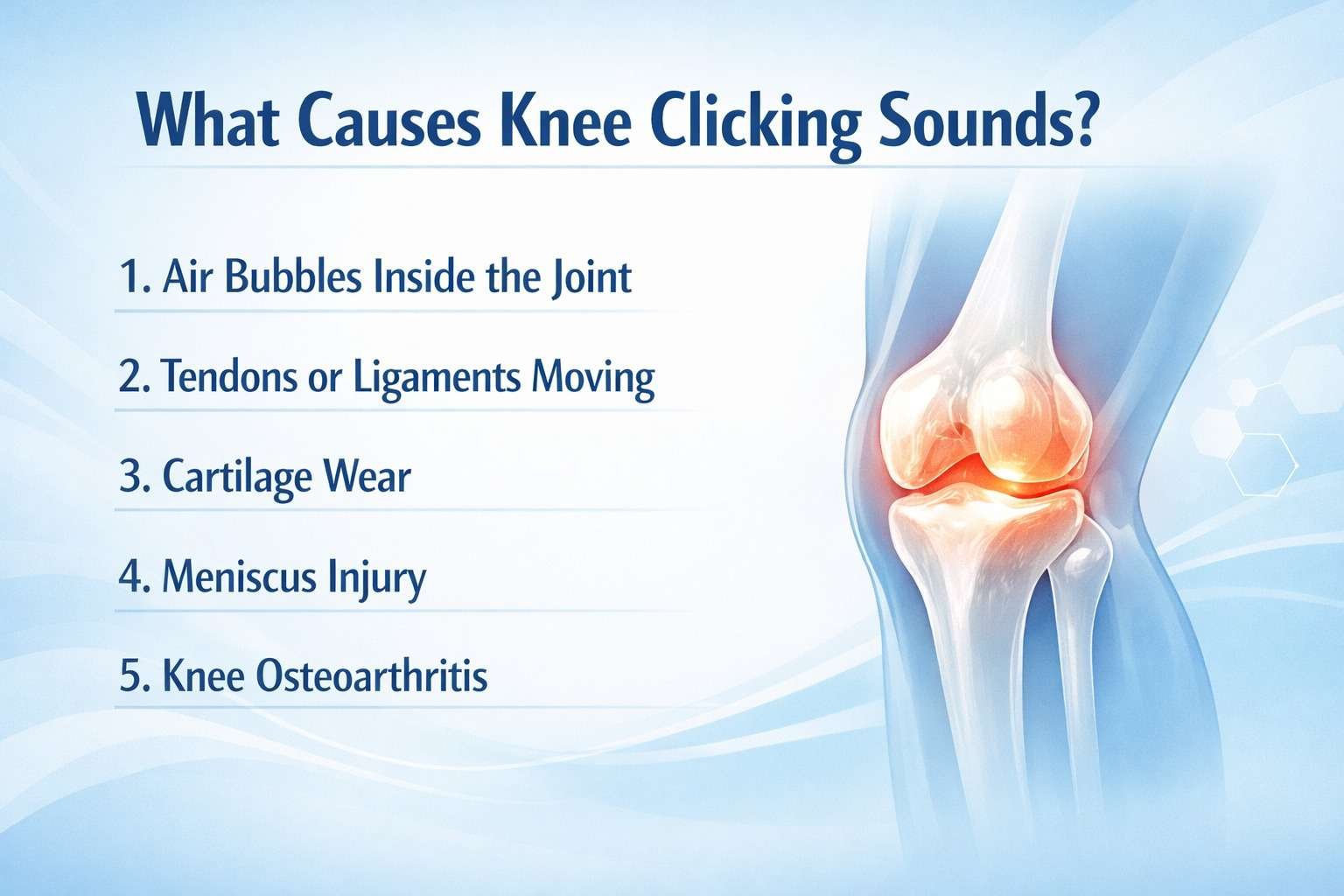
What Causes Knee Clicking Sounds?
The knee is one of the largest and most complex joints in the body. It contains bones, cartilage, ligaments, tendons, muscles, and fluid that work together to allow smooth movement.
A clicking or popping sound is medically known as crepitus. It can happen for several reasons.
1. Air Bubbles Inside the Joint
The knee joint contains synovial fluid that lubricates movement. Sometimes tiny air bubbles form in this fluid. When these bubbles burst during movement, they create a clicking sound.
This is completely normal if:
- There is no pain.
- There is no swelling.
- Knee movement remains normal.
2. Tendons or Ligaments Moving
As you bend or straighten your knee, tendons and ligaments may move over nearby bones. This movement can create a snapping or clicking sound.
This usually does not require treatment unless it causes pain.
3. Cartilage Wear
The smooth cartilage covering the ends of the bones helps the knee move without friction. As people age or after repeated stress on the joint, this cartilage can become rough and worn. When these rough surfaces rub against each other, the knee may produce grinding or clicking sounds. This is commonly seen in people with early arthritis. If these symptoms continue, it is important to consult a Knee Specialist for an accurate diagnosis and timely treatment. Learn more about advanced knee care here:
4. Meniscus Injury
The meniscus acts as a shock absorber inside the knee. A tear can cause:
- Clicking
- Locking
- Pain
- Swelling
- Difficulty bending the knee
Sports injuries and sudden twisting movements often cause meniscus tears.
5. Knee Osteoarthritis
Osteoarthritis is one of the most common reasons for persistent knee clicking.
As cartilage wears away, bones rub together, producing:
- Clicking sounds
- Grinding sensation
- Stiffness
- Pain while walking
- Reduced movement
If these symptoms continue, consulting an Orthopedic Surgeon in Thane is recommended for proper diagnosis.
When Is Knee Clicking Normal?
Knee clicking is usually harmless if:
- There is no pain.
- The sound occurs occasionally.
- There is no swelling.
- You can walk comfortably.
- The knee does not lock.
Many healthy people experience painless clicking throughout their lives.
When Should You See a Doctor?
You should seek medical advice if knee clicking is accompanied by:
- Severe pain
- Swelling
- Redness
- Warmth around the joint
- Knee instability
- Locking of the knee
- Difficulty walking
- Reduced range of motion
These symptoms may indicate ligament injury, cartilage damage, arthritis, or other orthopedic conditions.
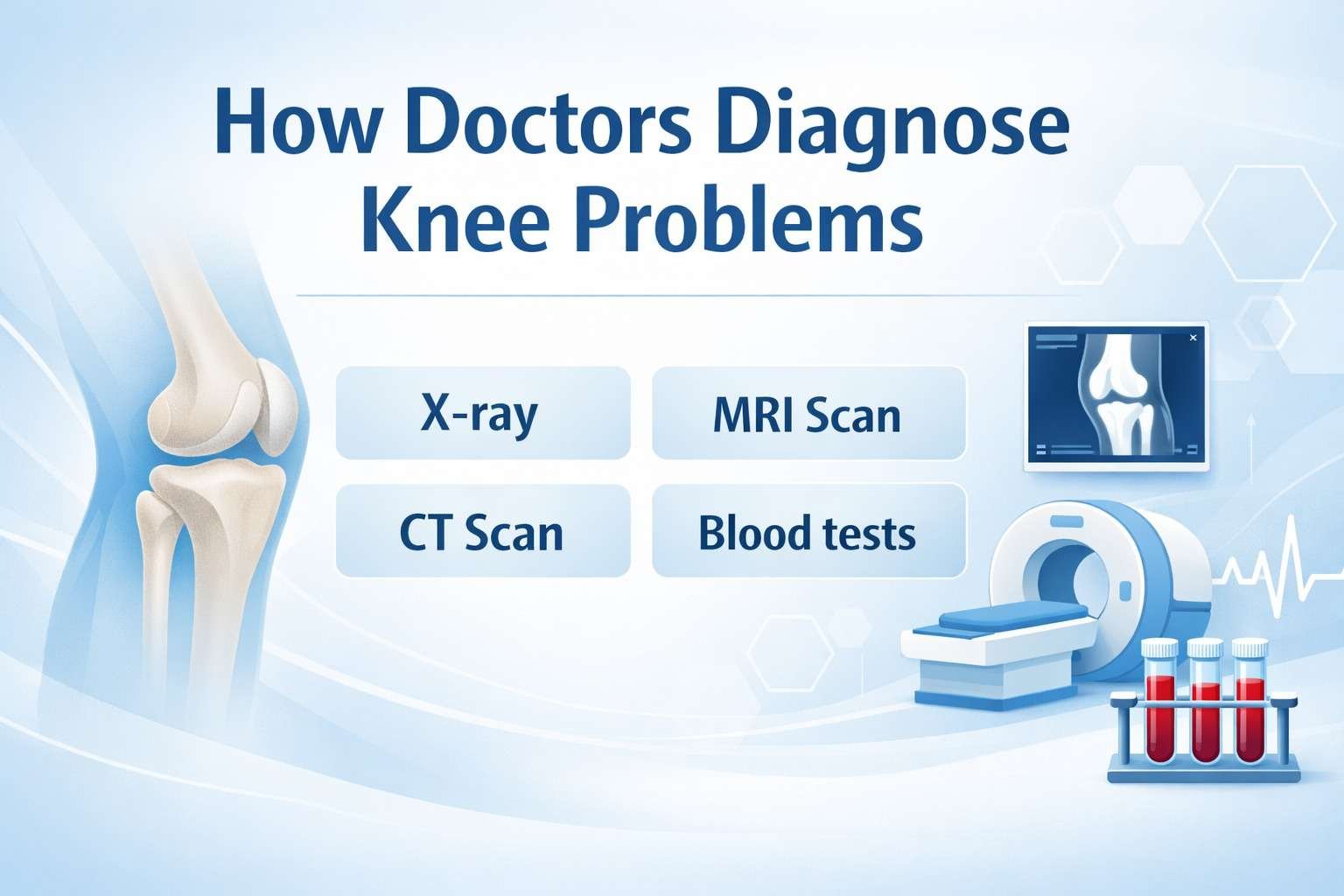
How Doctors Diagnose Knee Problems
An orthopedic specialist will begin with a detailed medical history and physical examination.
Depending on your symptoms, investigations may include:
- X-ray
- MRI Scan
- CT Scan
- Blood tests (if infection or arthritis is suspected)
Early diagnosis helps prevent further joint damage and improves treatment outcomes.
Treatment for Knee Clicking
Treatment depends on the underlying cause.
Lifestyle Changes
Many mild cases improve with simple measures:
- Maintain a healthy weight.
- Avoid prolonged squatting.
- Wear supportive footwear.
- Stay physically active.
Physiotherapy
Strengthening the muscles around the knee improves joint stability and reduces stress on cartilage.
A physiotherapist may recommend:
- Quadriceps strengthening
- Hamstring stretches
- Balance exercises
- Mobility training
Medications
Doctors may prescribe:
- Pain relievers
- Anti-inflammatory medicines
- Joint supplements (when appropriate)
Medication should always be taken under medical supervision.
Knee Injections
Some patients benefit from:
- Hyaluronic acid injections
- Platelet-Rich Plasma (PRP)
- Corticosteroid injections
These treatments may reduce pain and improve mobility in selected cases.
Surgery
If conservative treatment does not provide relief, surgery may be recommended.
Modern Orthopedic Surgery in Thane includes minimally invasive procedures that allow faster recovery for suitable patients.
Common surgeries include:
- Arthroscopy
- Meniscus repair
- Ligament reconstruction
- Partial knee replacement
- Total knee replacement
Learn more about advanced knee treatment here:
Knee Specialist
Can Knee Clicking Be Prevented?
Although not every cause can be prevented, healthy habits can reduce your risk.
Follow these tips:
- Exercise regularly.
- Strengthen leg muscles.
- Stretch before physical activity.
- Maintain proper posture.
- Avoid sudden twisting movements.
- Control body weight.
- Eat a calcium and protein-rich diet.
These habits help keep your joints healthy as you age.
Why Choose Dr. Bakul Arora?
If your knee clicking is associated with pain, swelling, or reduced movement, timely evaluation is important.
Dr. Bakul Arora is an experienced orthopedic doctor in thane who specializes in diagnosing and treating knee disorders using modern treatment techniques.
Patients visit his clinic for:
- Sports injuries
- Arthritis treatment
- Knee replacement
- Fracture care
- Joint preservation procedures